/home4/cnunesla/public_html/bewiseconsultant/wp-content/mu-plugins Be Wise https://bewiseconsultant.com Consultant Thu, 19 Nov 2020 15:00:50 +0000 en-GB hourly 1 https://wordpress.org/?v=6.9.4 https://bewiseconsultant.com/wp-content/uploads/2019/05/cropped-preto-04-32x32.png Be Wise https://bewiseconsultant.com 32 32 ENG – Imposto do Selo nas Doações https://bewiseconsultant.com/en/eng-imposto-do-selo-nas-doacoes/ Thu, 19 Nov 2020 12:11:20 +0000 https://bewiseconsultant.com/?p=4852

Tax Seal on Donations

Correio da Manhã Canada publishes the article "Tax Seal on Donations" in the 19/11/2020 edition by Vanessa Mendes, CEO of Be Wise Consultant.
Read the full answer:

24/11/2020.

SHARE THIS ARTCILE:

Facebooklinkedin

“(…) I want to donate an apartment, located in Lisbon, to my son…. I was chatting with friends at the cafe and they told me that I had to pay 10% tax seal”…

PT – Toronto

We would like, first of all, to thank you for placing your questions and consult with us in this space. The topic of donations, between parents and children, will be, irrefutably, a topic that will always remain current, since it concerns the payment of taxes.

We will try, in the best possible way, in our weekly space, to clarify your question: Will the donation of immovable property, an “apartment”, originate the payment of Tax Seal? At the rate of 10%? Even if this donation is made between parents and children?

It is important to mention that it is common for parents to decide, in life, to share their inheritance, or part of it, by distributing it to their loved ones.

In this sense, the question arises as to “what will cost”, in tax terms, that same act … It establishes the Tax Seal  code that free transmissions that have the object of property right, as is the case reported here.

As it is already identified that this operation is subject to the payment of Tax Seal, it is up to us to clarify what would be the rate to be applied. In this sense, whenever we are dealing with a donation of real estate, it is taxed at the rate of 0.8% plus 10%, that is, the equivalent of 10.8%.

However, until now, it remains to be seen whether, in the case of this donation being made between parents and children, if there is any exception to the above.

Thus, it is established by the Tax Seal code, an exemption in case donations are made to direct descendants.

In conclusion:

  1. Free transfers of property rights (such as donations) are always subject to tax;
  2. As a general rule, a “joint” rate of 10.8% is applied;
  3. There is an exception resulting from donations made by one of the “parents to their child”.

Place your questions to the following email: vmendes@firehorse.pt

Vanessa Mendes

CEO

More Answers

]]>
Payment of Gains | 10/11 | #CEOreplies https://bewiseconsultant.com/en/payment-of-gains-10-11-ceoreplies/ Thu, 12 Nov 2020 14:25:48 +0000 https://bewiseconsultant.com/?p=4792

Capital gains payment

The newspaper Correio da Manhã Canada publishes the article "Payment of Capital Gains" by Vanessa Mendes, CEO of Be Wise Consultant in the 10/11/2020 edition.
Read the full answer:

10 of November 2020.

SHARE THIS ARTICLE

Facebooklinkedin

“(…) I set up a company in Portugal, with a longtime friend, and I want to receive money from the fruits of our activity. I was informed that I have to pay 50% of IRS in Portugal, even though my residence is in Canada…”

Carlos Martins, Toronto

We would like to start by thanking the email you sent us, the questions raised being quite pertinent, we will, in the best way, clarify your doubts considering only the information presented.

First of all, it should be clarified that the question refers to the tax treatment to be given in PT to the distribution of dividends, carried out by an entity with headquarters in Portugal, to its partners, one of them, at least, residing in Canada.

In accordance with the taxation rules provided for in PT, as a rule, income paid as dividends by a company resident in PT, made available to a partner whose residence is located in another country, is taxed at a liberating rate of 28%, without applying the general IRS rates, these can, depending on the taxable income, reach 48%.

However, it should be noted that under the convention to avoid double taxation between PT and Canada, dividends obtained in PT may, when triggered, be taxed at a rate of 15%. In this way, a reduction in the tax burden in PT can be obtained, with the eventual and probably total recovery of this amount in Canada.

In conclusion, and in order to systematize, the dividends obtained by non-residents in PT, when made available to them by an entity whose residence is located in PT, are taxed there at the rate of 28%, and, if the Convention, a reduced rate of 15% should be applied.

Place your questions to the following email: vmendes@firehorse.pt

Vanessa Mendes

CEO

More Answers

]]>
Emigrants: Double Taxation on Real Estate Income | #CEOreplies https://bewiseconsultant.com/en/emigrants-double-taxation-on-real-estate-income/ Mon, 02 Nov 2020 16:22:14 +0000 https://bewiseconsultant.com/?p=4390

Emigrants: Double Taxation on Real Estate Income

Mundo Português publishes article "Emigrants: Double Taxation on Real Estate Income" in the 10/30/2020 edition by Vanessa Mendes, CEO of Be Wise Consultant.
Read the full answer:

30 of October 2020.

SHARE THIS ARTICLE:

Facebooklinkedin

“(…) I was informed that I had to pay IRS on the dividends I received in Portugal, however, at the same time, I have already paid taxes in Luxembourg on those same dividends, it is not fair! …”

We would like to start by thanking you for the email you sent us, the questions raised being quite relevant, so we will, in the best way, clarify your doubts.

Of the multiple questions presented, it is not possible to answer all of them in this space, as we have reiterated.
In this context, it will always be important to turn to a lawyer or tax advisor so that your doubts are properly clarified.

Following your question, it is important for us to address two distinct but related issues:
1st) the incidence of the tax, in the sense of knowing if the income obtained, from the dividends received, will give rise to the payment of IRS in Portugal, when your residence is located in Luxembourg;
2nd) if there is any way to solve the problem of “duplicate” payment.

First, it should be clarified that the income obtained, related to the dividends paid by a company residing in PT to a non-resident, is subject to the payment of IRS in PT. Therefore, the rate of 28% will be applied to these.

In a second step, it is necessary to answer the question of whether, due to the fact of obtaining this income in PT, there may be a way to reduce the tax burden in PT by the income obtained there.

Effectively, if the convention is triggered to avoid double taxation between Portugal and Luxembourg, there may be a way to reduce the tax burden, that is, the rate to be applied in Portugal, instead of being the usual 28%, would apply a reduced rate of 15%.

On the other hand, and in consultation with a tax consultant in Luxembourg, you will find that you may be able to deduct this tax paid in PT (or part) in Luxembourg.

As a conclusion, and in order to summarize, dividends received by non-residents in PT, paid by a company that has residence / headquarters there, are taxed at the rate of 28%, being possible, through the convention, to apply a rate reduced by 15% in PT, recovering this amount, or part, in Luxembourg.

Vanessa Mendes

CEO

More Answers

]]>
Payment of Gains | #CEOreplies https://bewiseconsultant.com/en/payment-of-gains/ Mon, 02 Nov 2020 16:17:50 +0000 https://bewiseconsultant.com/?p=4387

Payment
of Capital Gains

Newspaper Correio da Manhã Canada publishes article "Payment of Capital Gains" in the edition of 27/10/2020 by Vanessa Mendes, CEO of Be Wise Consultant.
Read the full answer:

27 of October 2020.

SHARE THIS ARTICLE:

Facebooklinkedin

“(…) I received a letter from Finance  saying  that I had to pay IRS on the sale of the house that my mother left me and that “I failed” by not submitting the respective statement…”

MM, Québec.

We would like to begin by thanking you for the e-mail you sent us, the questions raised being very relevant, so we will, in the best way, clarify your doubts. Of the multiple issues presented, it is not possible to answer all of them in this space. In this context, it will always be important to turn to a tax advisor so that your doubts are properly framed.

As a follow-up to your question, it is important to address it in two distinct but related ways: 1st) the impact of the tax, in the sense of knowing whether the sale of a property, inherited through the death of your mother, will give rise to the payment of IRS; 2nd) the obligation to comply with the submission of the IRS declaration.

First, it is necessary to clarify that the income obtained, related to real estate, resulting from the sale of a property located in Portugal, even if earned by a non-resident in Portugal, through an inheritance whose sharing already occurred, are subject to the payment of IRS in Portugal. Therefore, a 28% rate is applied to the capital gains obtained. This, of course, if the death occurred after 1989, when the IRS came into force.

In a second step, it is necessary to answer the question of whether, due to the fact of obtaining this income in PT, it is mandatory to submit the IRS declaration. In this case, since he is not exempt from doing so, his surrender would be mandatory.

In conclusion, and in order to systematize, the real estate gains obtained by non-residents in PT, even though
from an inheritance when the sharing of assets has occurred, they are taxed at the rate of 28%, and the submission of the income declaration is mandatory.

Vanessa Mendes

CEO

More Answers

]]>
Non-Housing Resident and Emigration | #CEOreplies https://bewiseconsultant.com/en/non-housing-resident-and-emigration/ Mon, 02 Nov 2020 16:14:31 +0000 https://bewiseconsultant.com/?p=4383

Non-Housing Resident and Emigration

Newspaper Correio da Manhã Canada publishes article "Regime of Non-Housing Resident and Emigration" in the edition of 13/10/2020 by Vanessa Mendes, CEO of Be Wise Consultant.
Read the full answer:

13 of October 2020.

SHARE THIS ARTICLE:

Facebooklinkedin

Our reader RP, from Quebec, raised some questions, among which we highlight the following comment / question:

“(…) it seems that Portugal is always like that, foreigners are good, not emigrants! Everything  they have is good, ours is not …”

Dear Sir,

We would like to start by thanking you for the length of the email you sent us. Of the multiple questions raised, it is not possible to answer all of them in this space. In this context, it will always be important to turn to a tax consultant so that your doubts are properly clarified.

As a follow-up to your question, the tax regime for Non-Housing Resident (RNH) can be used either by foreigners or by Portuguese. The requirement concerns residence and not nationality. Thus, as long as the person concerned has not been resident in Portugal in the last 5 years, he / she may benefit from the regime for a period of 10 years, consecutive or interspersed.

For this to be possible, it will be necessary to register your residence in Portugal, this requirement being mandatory, since we are in the presence of a regime exclusively assigned to residents.

This regime has several advantages from a tax point of view, namely, for people who carry out activities with high added value (20% rate) and even for pensioners.

As Benjamin Franklin said, “Nothing is more certain in this world than death and taxes”. If so, and if there are legal vehicles at our disposal to “lighten” our tax burden, why not take advantage of them?

Vanessa Mendes

CEO

More Answers

]]>
Non-Habitual Resident Tax Regime https://bewiseconsultant.com/en/non-habitual-resident-tax-regime/ Thu, 15 Oct 2020 16:04:27 +0000 https://bewiseconsultant.com/?p=3889

Non-Habitual Resident Tax Regime

The journal Mundo Português publishes article "The Tax Regime of Non-Habitual Resident" in the edition of 16/10/2020 by Vanessa Mendes, CEO of Be Wise Consultant.
Read the full article:

16th October 2020.

SHARE THIS ARTICLE:

Facebooklinkedin

Much has been said about the tax regime of Non-Habitual Resident (NHR) in the last decade, being pointed out, by many, as an attractive tax regime for foreigners who change their tax residence to Portugal. However, there is still doubt about the use of this regime by Portuguese people who are currently living outside their country.

It is important to step back a little, before answering this question, and to address some of the advantages of this regime so “appreciated” and “desired”. We are in the presence of a regime that, in the first place, aims to attract “big brains”, pensioners and investors to the national territory in order to foster the competence, on the one hand, of our professionals and, on the other, to capture the interest of pensioners who want to enjoy an exceptional climate, good food and a lot of friendliness! We associate an equally important factor with all the ones stated above: reduction of the tax burden.

Therefore, the NHR regime allows those whose residence in the last 5 years has been located outside the national territory to apply, for a period of 10 years, for a reduction in the tax rate on lower earned income (20% for high-income with added value activities) to what would be applied in the current countries of your residence, benefiting from the method of exemption for income earned abroad.

It should also be noted that pensioners may, provided that at the date of entry into force of the law (which changes the regime for taxing pensions), they are considered to be resident for tax purposes and apply for registration as an NHR until March 31, 2020 or 2021, benefit from total tax exclusion on your pensions.

As we can see, the regime does not distinguish between nationalities, but it does place its emphasis on residence, that is, it is enough that, regardless of nationality, one has not resided in Portuguese territory in the last 5 years to benefit from the regime.

Vanessa Mendes

CEO

Related News

]]>
Diaspora Investment Support Program https://bewiseconsultant.com/en/diaspora-investment-support-program/ Thu, 08 Oct 2020 11:10:17 +0000 https://bewiseconsultant.com/?p=3811

Diaspora
Investment Support Program

Mundo Português newspaper publishes article "Diaspora Investment Support Program" in the 10/2/2020 edition written by Vanessa Mendes, CEO of Be Wise Consultants. Read the full article:

2nd October 2020.

SHARE THIS ARTICLE:

Facebooklinkedin

These days, given the global context in which we live, the result of a pandemic that shows no signs of wanting to fade away, all the support that comes from the governments is essential, not only for the recovery of citizens and business financial stability, but also as a promoter vehicle for the creation of new jobs by investing through the implementation, expansion and improvement of new productive activities.

For that purpose, the Portuguese Government has sensibly designed a National Diaspora Investment Support Program (PNAID) including four main areas, describing it with 23 measures and 87 sub-measures with the aim of supporting emigrants, children of Portuguese or other members of the Portuguese Diaspora through investment in our country.

We know that the connection to our country is never lost, even though at some point in our life we have physically became distant from it, whatever the reason associated with that separation might be, and I would take the risk and say that when we find ourselves living in another country, or even when we are on vacation, this connection increases even more. It is a paradigmatic case that we hear “I miss Portuguese food, holidays spent by the sea or in the interior of Portugal, the sun and the good mood of the Portuguese.”

There is no place in the world where the influence of the Portuguese is not noticeable, we are a unique nation, and as it should be, we also like to invest in our country so that our culture is preserved, the living standard of our families is, although gradually, better and our entrepreneurial spirit is maintained, being passed on from generation to generation. In addition to all that, we also want to have a place to return. For us and for what is ours.

With these types of initiatives, to support the investment of immigrants from and in Portugal, we managed to achieve all these purposes.

Support, through the PNAID, covers several areas, such as tourism and agriculture, not forgetting education and housing. In the field of education, it should be noted that the Government has taken into account reserving a 7% quota, equivalent to about 3,500 places, in higher education, without excluding any course, for immigrants and their families who decide to invest in Portugal under this program.

As mentioned, the program includes different areas, the most important being the support to job creation, productive innovation and urban rehabilitation and energy efficiency. Portugal has long needed a program like this to encourage and support the Portuguese community to re-establish links to their country by fostering entrepreneurship.

The essential question now remains with the Diaspora. Of course, it is natural to have questions. Many have their lives and businesses organized, and although the prospect of return is , even only for the purpose of investment , attractive, information is essential to make decisions, in particular, decisions that will affect lives for years to come.

Without disregarding the spirit of initiative, we can and must advance with the best information. Take advantage of the existing support and of these that are yet to be made available. Accept the challenge.

Vanessa Mendes

CEO

Related News

]]>
Portuguese Diaspora https://bewiseconsultant.com/en/en-portuguese-diaspora/ Fri, 02 Oct 2020 14:25:19 +0000 https://bewiseconsultant.com/?p=3722

/INCENTIVES

Portuguese
Diaspora

Beneficiaries: Portuguese emigrants abroad, children of Portuguese residing abroad or other members of the Portuguese Diaspora. Interested parties must complete the form to obtain Diaspora Investor Status. (available on the Communities Portal)

Covering area: National (but more inland)

Incentives:

+ CO3SO Programs – to support HR recruitment in inland areas.

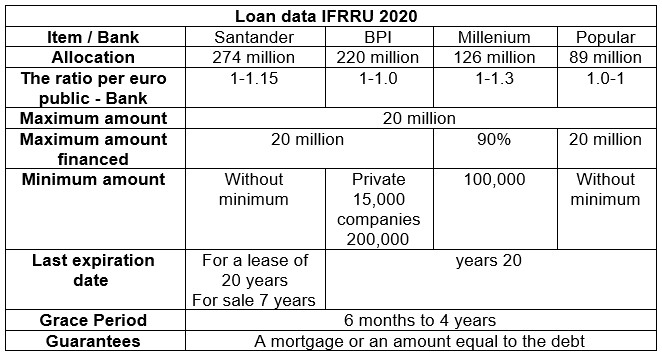
IFRRU – Loan program for urban rehabilitation in areas defined by the municipalities.

08SI2020 – Productive Innovation Program in areas of low population density, in which members of the Portuguese Diaspora have a base investment rate attributed to 30% of the investment value.

Optimization of the tax benefits of the land exchange.

Incentive to accessible rental and return program.

7% places in Higher Education.

Support lines in tourism investment

Surcharges:

08SI2020 has increases in the base investment rate up to 70%, depending on the characteristics of the project.

+ CO3SO Employment depends on the characteristics of the project.

Funding limits: Depend on the programs themselves. One expenditure may not be eligible for two different programs.

Notice closing date: 08SI2020 closes on 12.31.2020

/GET MORE AND BETTER INFORMATION WITH US

Let's talk about your project.

]]>
Norte-45-2020-75 https://bewiseconsultant.com/en/en-norte-45-2020-75/ Thu, 01 Oct 2020 14:55:57 +0000 https://bewiseconsultant.com/?p=3699

/INCENTIVOS

Norte-45-2020-75

Program: Horizon Europe

Beneficiaries: Entities whose activity is research and development; Educational institutions; State and private laboratories; Companies with R&I projects.

Covering area: North

Percentage of financing rate:  85%.

Surcharges: Not Applicable

Refundable or non-refundable incentive: NRI

Maximum funding limit to request: Basic expenses 100%; remaining between 60% and 90%.

Notice closing date: 30.10.2020

/GET MORE AND BETTER INFORMATION WITH US

Let's talk about your project.

]]>
IFFRU https://bewiseconsultant.com/en/en-iffru/ Tue, 22 Sep 2020 13:14:09 +0000 https://bewiseconsultant.com/?p=3561

/INCENTIVES

IFFRU

Beneficiaries: Private and Corporate.

Expenses: Everything with urban rehabilitation; Energy Efficiency.

Applications:

1- Opinion of the Municipality

2- Energy Certificate issued by a Qualified Expert

3- Financing Request.

Financing Request: Contracting of services within a maximum period of 3 months.

Projects through guarantees financed by European funds.

Requirements:

  • Technical characterization and cost justification.
  • Operation goals / objectives.
  • Among others…

/GET MORE AND BETTER INFORMATION WITH US

Let's talk about your project.

]]>